THE PATH OF THE UNSEEN WHALE
for Bass Clarinet and Electronics (2019)
The field recording used in this piece was made by Dr Ellen Garland (University of St Andrews) and Dr M. Michale Poole (Marine Mammal Research Programme, Mo’orea). You can listen to a section of it below.
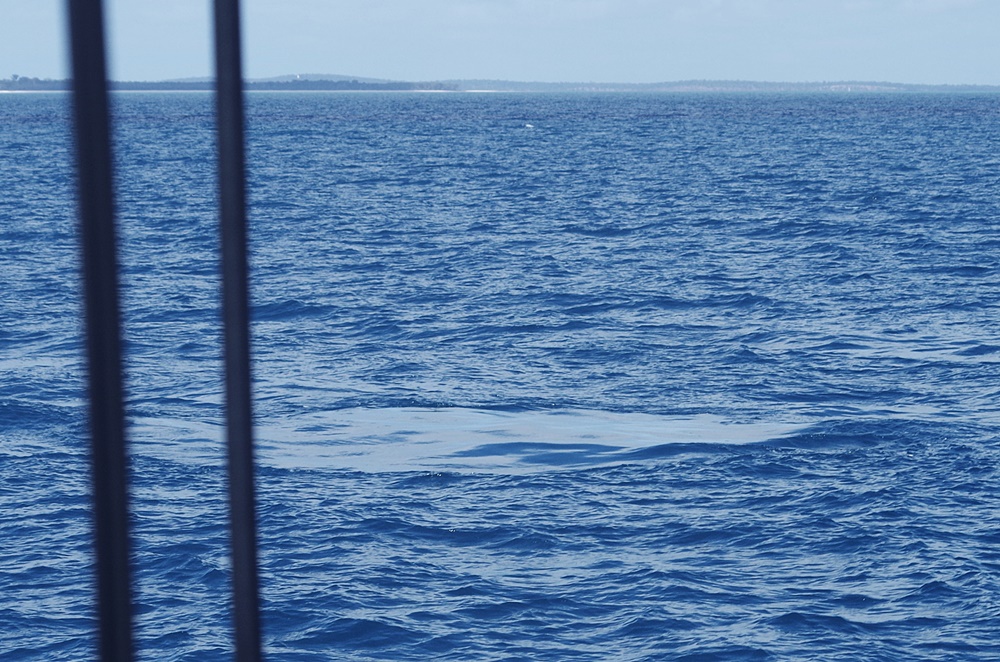
In his book ‘Leviathan or, The Whale’ (2008), Philip Hoare writes of the track left by the whale’s flukes through the sea, “as still as a pond even in rough seas.” Both the early whalers and Inuit do not cross it, the latter out of respect, “seeing this qaala – ‘the path of the unseen whale’ – as the animal’s mirror into our world, and our mirror into its own.” This piece makes use of a field recording of a humpback whale made in September 2015 by Ellen Garland (University of St Andrews) and M. Michael Poole (Marine Mammal Research Programme, Mo’orea, French Polynesia) off the island of Mo’orea in the South Pacific. The recording also contains the crackles and pops of multitudes of snapping shrimp. The cetacean soloist itself is, however, largely unheard, its voice excised from the recording and replaced with mimetic musical gestures sketched by the human performer and slowly transformed by electronics into an eerie clamour. The gaps on the field recording initially represent the still qaala on the surface of the ocean, but as they lengthen and fill with anthropogenic sound they mirror the reality of what has been happening in the deeps: the ever-increasing clattering, roaring and wailing of container ships, seismic mapping and military sonar. Such noise pollution is largely unreported by the media but causes chronic and acute harm to marine mammals and fish. © Alex South 2023
Image credit © Alex South 2018